Renal Transplantation Surgeries | Kidney Transplant Surgery Treatment – NU Hospitals
 |
| Renal Transplantation Surgeries |
What is renal transplantation surgery?
Renal transplant surgery is the medical procedure wherein a donor kidney is transferred to a patient who has had End Stage Renal Disease (ESRD) which is the last stage of Chronic Kidney Disease (CKD).
Who needs Kidney transplant surgery?
Renal Transplantation surgeries are needed for people suffering from End Stage Renal Disease (ESRD). This is caused by Polycystic Kidney Disease, diabetes, hypertension and other conditions.
Is Kidney Transplant surgery a better option than renal dialysis?
A transplant is much better than dialysis because dialysis is needed three times per week and each renal dialysis treatment lasts about four hours. Also, renal dialysis does not cure kidney disease and might be needed for a longer duration depending on the condition of the patient. Renal dialysis causes lot of discomfort for the patient during the treatment. Kidney transplant surgery is a better option than renal dialysis because it drastically improves a person’s longevity.
Contraindications
Severe heart conditions and Cancer are the contraindications. However, every patient is evaluated individually for risks and benefits.
Types of kidney donors
a) Living donor: When a living person voluntarily becomes a donor. People born with only one working kidney lead a normal life. So, a person can donate one kidney to a patient who needs a transplant.
b) Deceased donor: The deceased donor can be categorized into either heart beating donors or cardiac death donors. Similar to the living donor, blood testing is done to check compatibility with the person receiving the kidney.
Renal transplantation surgeries procedure
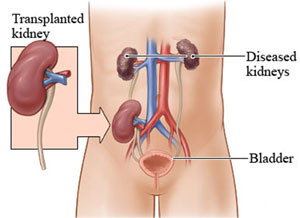
a) The existing kidneys are not removed because it requires additional surgeries. So, the donor kidney is usually made to sit in the iliac fossa region.
b) A separate blood supply is needed and hence, the renal artery and vein of the donor kidney is ligated to the outer iliac artery and vein.
c) The donor ureter is then joined with the recipient bladder.
Post-surgery
Post kidney transplant surgery, the recipient is nursed careful with standard procedures. Low molecular weight heparin is given as an anti-coagulant to prevent blood clot in the arteries and veins. Immunosuppressive drugs are given orally. Finally the bladder catheters are removed within a week. To prevent any further infections, the patient is asked to follow certain procedures at home such as using hand sanitizers and maintaining good hygiene practices. Doctor may also advise the patients against the use of meat or raw undercooked foods. The patients are also advised against lifting of any heavy objects for up to six weeks. Regular fluid intake should be there for the kidneys to function properly.
Complications
Every individual reacts differently to renal transplantation surgeries; it usually depends on the patients’ age and past medical history. Complications from kidney transplant surgery may include bleeding, infection and transplant rejection. Hypertension and other side effects from medications may occur. Regular follow up and doctors’ advice should be heeded.
For more: https://www.nuhospitals.com/


Comments
Post a Comment